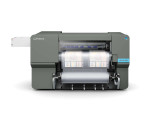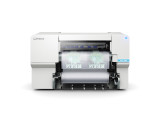








Unleash unparalleled DTF performance and productivity with the TY-300. This powerhouse direct-to-film printer delivers stunning graphics and bold designs for heat transfer onto a wide range of materials, including cotton, polyester, denim, nylon, rayon, and more. Transform custom apparel and textiles with technology that enables you to produce vibrant colors, razor-sharp text, and fine details with unprecedented cost effectiveness, speed, and efficiency.
Welcome to a new generation of DTF printing.
- The TY-300 offers higher print quality than the competition – reproduces colors, detailed images, and even smaller text with amazing accuracy.
- Prints at speeds up to four times faster than competitive models, allowing for optimum productivity.
- Low running costs and reduced ink consumption during printing/cleaning make the TY-300 more cost-efficient than other DTF printers.
- Creates durable apparel and textiles with a “soft hand” feel, natural finish, and outstanding washability.
TY-300 Specifications
- Media width: 7.2 to 30 in. (182 to 762mm)
- Printing/Cutting width *: Maximum 28.9 in (736 mm)
- Ink cartridges type / capacity: S-PG2 INK 500 ml cartridge - Order here
- Ink cartridge: 5 Color – Cyan, Magenta, Yellow, Black, White - Requires 2 whites
- Printing resolution: Maximum 1,200 dpi
- Cutting speed: 0.39 to 11.8 in/s (10 to 300 mm/s)
- Dimensions: 80 in x 29.5 in x 55.8 in (2,032 mm x 748 mm x 1,415 mm)
- Included items: Dedicated stand, Power cord, Media holders, Separating knife, Replacement blade, Cleaning liquid, Drain bottle, User's Manual, Software(VersaWorks, Roland DG Connect), etc.